The following extract is taken from a letter in the Library of the
Massachusetts Historical Society, written by the Rev. John Cotton to
his wife at Plymouth, and dated "Election night Boston" (May 29, 1695).
It is found in the volume marked on the back, "Letters & Papers 1679 -
1700" (page 102), and gives very nearly the day of the release of the
Reverend Gershom Hobart's son, who was captured by the Indians at their
assault on the town, July 27, 1694. The writer says:
"Some Indians that went upon scoute have brought in 2 scalpes & 3 guns
& they conclude that the third gun had an owner whom they sorely
wounded or else they should not have found his gun: noe newes of the
snow frigat, it is greatly feared it is cast away upon rocks for want of a
skilfull pilot: but the choice newes is that all the Easterne
sachims but one (at least most of them) are come to Pemaquid & have
brought in eight captives, confest their great evill in fighting against us;
litle Gershom Hobart is one (tell his Aunt Bradford soe)
if an Easterly winde come they will be here by tomorrow this houre."
Gershom Hobart, Jr. was born undoubtedly at Groton, though the date of
his birth does not appear in the town records. He was married on Feb 26,
1713/14 to Lydia Nutting, daughter of James and Lydia Nutting, born
on June 3, 1686. He probably was near the same age as his wife, which
would have made him a boy of eight or ten years old at the time of his
capture. For some other facts relating to the lad, see the first volume of
this Series No. XII (p.6).
Joseph Bradford of Plymouth was married to Jael Hobart, aunt of
Gershom Hobart, Jr., and the allusion in the extract "tell his Aunt
Bradford so(e)," given above is to her.
Source: Historical Series by Dr. Samuel A. Green Vol II, 1890; p. 59
Sunday, May 06, 2012

Sunday, April 22, 2012
Clayton and Sadie

Clayton Charles Britton

Sadie Stella Vasseur
From Clayton's autobiography:
Now an event took place [in 1920] that perhaps had strongly influenced future developments. I got a call in Edmunston from Sadie Vasseur inviting me to a leap year ball to be held on Friday night. I believe this was the day I got the call. At any rate there was no further passenger trains to Grand Falls that day and it was in the dead of winter. No cars were running in the winter in those days, so what to do. Grand Falls was 38 miles down river, and almost just might as well have been on the moon. However, a good looking gal had sent out a call and this young buck was going to find a way. It was alot of years later that I found that I wasn't the first choice. In fact it was sort of last chance thing. I sometimes wonder had I known that, would I have taken the chance it involved. Going down to the railroad station I found out they were making up a freight train going in that direction. But I had to sign a paper excusing the railroad of any responsibility because owing to the heavy snowfall the train would not stop in Grand Falls, nor slow down, for fear that they would not be able to keep going.
So I spent the trip in the kaboose at the rear of the train and about 200 yards from the station I jumped into the deepest snow drift I could spot, and did a few loops before coming to a halt. After gathering myself together I found that outside of my dignity, nothing else was seriously damaged. There was still about six miles to walk before I could reach home and get ready for the big ball. Mother always prevailed upon me to wear the red label heavy wool underwear, so after a couple of dances you had to go outdoors to let the steam roll up your collar and let some of the sheep smell evaporate.
My gal was dietician at the hospital. She looked real sharp that evening with her fiery red stockings and red slippers to match. I remember he rlong hair was done up in two braids, one over each ear. I'm not sure but I don't think I got a good night kiss for all my troubles which perhaps just wetted my appetite for another go at it.Later:
By spring [of 1922] I was going real well in the romance department, even though I was a dedicated protestant and Sadie was a catholic. Besides my horse eating away the most of her father's piazza post, which I tied her to, there was considerable competition from a guy named Nub Esty. When she worked at the hospital, he would wait until I had gone then show up with a bottle of olives or candy of some sort. One evening in the spring I put a stop to that coniving. She and I were walking up Broadway when we came upon Nub and another guy sitting on the grass by the sidewalk. My little girl plumped herself down on the grass beside them and said something like that was comfortable and guessed she would spend the evening there. That kid of curled my hair so I bid them goodnight and kept right on walking. I hadn't gone far when my little old gal came trotting to catch up with me, mad as a hornet. That came very near ending that romance on the spot, but I held out and gave her to understand that I shared my girl with nobody!
That fall Wade Taylor and I decided to go hunting back to the Long Grade area. While waiting for a 2 o'clock train the night we left, I spent the evening on a couch in the hospital waiting room. I had my rifle leaning against a chair but I don't think that influenced Sadie and when I asked her to marry me, she accepted. I took cloud nine to the station.
The wedding:
I got a letter from Sadie saying that things were getting a bit sticky with her family and if we weren't going to get married right away she would take a job in a nursing home in New Jersey. That didn't set too well with me so I sent her some money and told her to get out to Mansfield fast. Though I was about to be 22 years old I still was pretty nervous about taking on a wife and all the problems that went with it. Just the same, I felt that I had wandered enough and needed to get settled down with some purpose in life.
Sadie landed around the first of November, 1922 and we were married [in Mansfield, Massachusetts] on the eleventh in the Methodist Church by a saintly looking old preacher that seemed to please Sadie very much. I very stupidly figured I could not afford to go on a honeymoon with winter coming on and thought I'd better get in every day that I could. We went to a dance that night and had a special waltz played for us.
Gershom Hobart, 1645-1707
My 8th great grandfather, Gershom Hobart, was born to Reverent Peter Hobart and his wife, Elizabeth Ibrook, in Hingham, Massachusetts, in December 1645. Gershom followed the examples of his older brothers, Joshua and Jeremiah, and graduated from Harvard University. His brothers Nehemiah and Japhet also received their degrees from Harvard the same year, in 1667. After graduating, he returned to Hingham, where he was living when he made freeman at the May session of the General Court in 1673.
In April 1676, Gershom married Sarah Aldis in Dedham, Massachusetts, and they went on to have as many as 12 children together.
In June 1677, John Cotton wrote to Increase Mather saying that he had employed Gershom to preach "because he was forced from his worke," and procured a contribution for him. Because they looked "upon [Gershom] as low," the deacons made an additional gift from the church treasury, in addition to what John Cotton was already paying him.
Soon after, Gershom accompanied or followed the settlers, who, after the destruction of Groton by the Indians in 1676, returned in the spring of 1678. On June 29, 1678, the settlers made him liberal grants of land and privileges, if he would "accept of ye call and come to settle among" them "to be ye Townes Minister & the churches officer." He was ordained as minister of the Congregational Church there on November 26, 1679.
In 1680, records show that Gershom was to be paid "seaventy pound for this year [1681]: ensuing and to pay him in corn Indian wheat Rye barley at price curant as the court stat it and in other provission as god blesse us withall and 30 cord of wood to be proportioned by the sellect men according to every mans proportion to be payd by the first of March." Later, his salary was reduced to 50 pounds, one quarter of it to be paid in money.
It appears that Gershom did not live harmoniously with his parishioners in Groton. They differed at first about the location of the new meetinghouse (the old one had been burned down by the Indians in 1676), and then about his salary.
In 1682 it was voted that "the salackt men doe mak and maintain pase and love one with an other in the town and ashpashaly with m. hubard [Hobart] in incoridging him in his work by forwarding won and other in being wiling to alow him honorabl maintanans as the law darackts in pay and they warn the in habitants to gather till thay be agreed with him and the salack men mak no rate till the town be agreed with him."
Unfortunately the disagreements over his salary continued, and in December 1685 it was voted that Gershom had "set himself at liberty from the said town as to any engagement from him as their minister as also he has freed the town from any engagement to himself...by refusing and slighting what what the said town had offered him for his salary." A vote was held to increase Gershom's salary, but it did not restore peace. It seems the primary problem was a scarcity of money, and disagreement over whether corn and other supplies could be used by settler families to pay their portion of Gershom's salary.
Gershom decided to leave the town sometime in 1689, and the town made proposals to him to return in 1690 and again in 1693.
Gershom came back with his family sometime before January, 1694. In July of that year, the Indians attacked the town again. They killed more than 20 people, and carried away more than a dozen. During the attack, "Mr. Gershom Hobart, the Minister of the Place, with part of his Family, was Remarkably preserved from falling into their Hands, when they made themselves the Masters of his House; though they Took Two of his Children, whereof the one was Killed, and the other [Gershom, Jr., my 7th great-grandfather] some time after happily Rescued out of his Captivity." A captive, who escaped from the Indians and arrived at Saco on April 25, 1695, reported that "Mr. Hobart's son Gershom is well at a new Fort a days journey above Nerigawag [Norridgewock], Master's name is Nassacombewit, a good Master, and Mistress." A ransom was paid, and Gershom, Jr., was reunited with his family, after having spent about a year in slavery.
Gershom Sr. continued to preach in Groton until 1705. The town of Groton experienced many difficulties during that time. A petition to the General Court from the town of Groton in January 1704 speaks of the "grat damidg & discoridgment and spashaly this last yere having lost so many parsons som killed some captivated and som ramoved and allso much corn & cattell and horses & hay wharby wee are gratly Impoverrished and brought vary low." The petition represents Gershom as having been "for above a yere uncapable of desspansing the ordinances of God," and that neighboring ministers advised them to "hyare another minister and to saport mr hubard [Hobart] and to make our adras to your honors...for we are so few & so por that we canot pay two ministers nathar are we willing to live without any." Twenty pounds were granted by the Court to the town of Groton to pay another minister and to "help them under the present Disability of their Pastor Mr. Hubbard [Hobart]."
Gershom died in Groton on December 19, 1707. His wife Sarah died on April 14, 1712.
Source: Biographical Sketches of Graduates of Harvard University.
Note: Groton, where Gershom preached and lived, is five minutes from our home.
Another note, about Gershom's brothers: Japhet, who graduated from Harvard the same year as Gershom, trained to be a medical doctor, and left on a ship for England as the ship doctor shortly after graduation. His intention was to then continue on to the East Indies, but he was never heard from again. Family tradition states that Japhet "travelled into foreign parts, renounced his Religion, & became a Romanist, & died a Cardinal or some great Dignitary in the Church of Rome." The brother with whom Japhet and Gershom graduated, Nehemiah, went on to become a preacher in Newton, and a Senior Fellow at Harvard. His obituary in the Boston News-Letter, stated that Nehemiah was "Senior Fellow of Harvard College, an excellent scholar, divine, and Christian; very much lamented throughout the whole Province." One of his successors at Harvard wrote that in Nehemiah "shone the scholar, the gentleman, and the Christian...An unshaken harmony subsisted between him and his people through life." He had a "serious and winning manner of address, which caused his congregation to hang upon his lips."
In April 1676, Gershom married Sarah Aldis in Dedham, Massachusetts, and they went on to have as many as 12 children together.
In June 1677, John Cotton wrote to Increase Mather saying that he had employed Gershom to preach "because he was forced from his worke," and procured a contribution for him. Because they looked "upon [Gershom] as low," the deacons made an additional gift from the church treasury, in addition to what John Cotton was already paying him.
Soon after, Gershom accompanied or followed the settlers, who, after the destruction of Groton by the Indians in 1676, returned in the spring of 1678. On June 29, 1678, the settlers made him liberal grants of land and privileges, if he would "accept of ye call and come to settle among" them "to be ye Townes Minister & the churches officer." He was ordained as minister of the Congregational Church there on November 26, 1679.
In 1680, records show that Gershom was to be paid "seaventy pound for this year [1681]: ensuing and to pay him in corn Indian wheat Rye barley at price curant as the court stat it and in other provission as god blesse us withall and 30 cord of wood to be proportioned by the sellect men according to every mans proportion to be payd by the first of March." Later, his salary was reduced to 50 pounds, one quarter of it to be paid in money.
It appears that Gershom did not live harmoniously with his parishioners in Groton. They differed at first about the location of the new meetinghouse (the old one had been burned down by the Indians in 1676), and then about his salary.
In 1682 it was voted that "the salackt men doe mak and maintain pase and love one with an other in the town and ashpashaly with m. hubard [Hobart] in incoridging him in his work by forwarding won and other in being wiling to alow him honorabl maintanans as the law darackts in pay and they warn the in habitants to gather till thay be agreed with him and the salack men mak no rate till the town be agreed with him."
Unfortunately the disagreements over his salary continued, and in December 1685 it was voted that Gershom had "set himself at liberty from the said town as to any engagement from him as their minister as also he has freed the town from any engagement to himself...by refusing and slighting what what the said town had offered him for his salary." A vote was held to increase Gershom's salary, but it did not restore peace. It seems the primary problem was a scarcity of money, and disagreement over whether corn and other supplies could be used by settler families to pay their portion of Gershom's salary.
Gershom decided to leave the town sometime in 1689, and the town made proposals to him to return in 1690 and again in 1693.
Gershom came back with his family sometime before January, 1694. In July of that year, the Indians attacked the town again. They killed more than 20 people, and carried away more than a dozen. During the attack, "Mr. Gershom Hobart, the Minister of the Place, with part of his Family, was Remarkably preserved from falling into their Hands, when they made themselves the Masters of his House; though they Took Two of his Children, whereof the one was Killed, and the other [Gershom, Jr., my 7th great-grandfather] some time after happily Rescued out of his Captivity." A captive, who escaped from the Indians and arrived at Saco on April 25, 1695, reported that "Mr. Hobart's son Gershom is well at a new Fort a days journey above Nerigawag [Norridgewock], Master's name is Nassacombewit, a good Master, and Mistress." A ransom was paid, and Gershom, Jr., was reunited with his family, after having spent about a year in slavery.
Gershom Sr. continued to preach in Groton until 1705. The town of Groton experienced many difficulties during that time. A petition to the General Court from the town of Groton in January 1704 speaks of the "grat damidg & discoridgment and spashaly this last yere having lost so many parsons som killed some captivated and som ramoved and allso much corn & cattell and horses & hay wharby wee are gratly Impoverrished and brought vary low." The petition represents Gershom as having been "for above a yere uncapable of desspansing the ordinances of God," and that neighboring ministers advised them to "hyare another minister and to saport mr hubard [Hobart] and to make our adras to your honors...for we are so few & so por that we canot pay two ministers nathar are we willing to live without any." Twenty pounds were granted by the Court to the town of Groton to pay another minister and to "help them under the present Disability of their Pastor Mr. Hubbard [Hobart]."
Gershom died in Groton on December 19, 1707. His wife Sarah died on April 14, 1712.
Source: Biographical Sketches of Graduates of Harvard University.
Note: Groton, where Gershom preached and lived, is five minutes from our home.
Another note, about Gershom's brothers: Japhet, who graduated from Harvard the same year as Gershom, trained to be a medical doctor, and left on a ship for England as the ship doctor shortly after graduation. His intention was to then continue on to the East Indies, but he was never heard from again. Family tradition states that Japhet "travelled into foreign parts, renounced his Religion, & became a Romanist, & died a Cardinal or some great Dignitary in the Church of Rome." The brother with whom Japhet and Gershom graduated, Nehemiah, went on to become a preacher in Newton, and a Senior Fellow at Harvard. His obituary in the Boston News-Letter, stated that Nehemiah was "Senior Fellow of Harvard College, an excellent scholar, divine, and Christian; very much lamented throughout the whole Province." One of his successors at Harvard wrote that in Nehemiah "shone the scholar, the gentleman, and the Christian...An unshaken harmony subsisted between him and his people through life." He had a "serious and winning manner of address, which caused his congregation to hang upon his lips."
Thursday, October 13, 2011
Charles A. Hale, 1845-1864


Charles A. Hale was the son of Sprague Taylor Hale and Nancy May Moulton. He was my 1st cousin 5x removed. (Sprague's brother Amos Spaulding Hale was my 4th great grandfather.) Charles' grandfather, Nathan Moulton, fought in the Revolutionary War.
During the Civil War, Charles volunteered for the 11th Vermont Infantry, the largest regiment that Vermont sent to the war. For a long time, the 11th had a relatively easy assignment, defending Washington. That changed in 1864, after the terrible losses at the Battle of the Wilderness, when the regiment was ordered to reinforce the army of the Potomac and report for duty as infantry near Spotsylvania Court House. Charles survived the battles at Spotsylvania, Cold Harbor, and Petersburg before he was captured at Weldon Railroad, Virginia. In the affair at Weldon Railroad, on June 23, 1864, the regiment suffered the greatest loss suffered by any Vermont regiment: 9 killed, 31 wounded, and 261 captured (including Charles).
Charles was sent to Andersonville, the terrible POW prison in Georgia, where he died of scurvy on November 17, 1864. He is buried at Andersonville, in grave 1206.
Charles' younger brother Franklin married, had three children and died in 1940. His younger sister, Nellie, attended Amherst after the war, married and had a daughter.
Sunday, May 16, 2010
Leslie Willard Fish

LESLIE WILLARD FISH was born on May 15th, 1890 in Charlottetown, Prince Edward Island, Canada. His parents were George Franklin Fish and Rilda Warren, both of Cape Wolfe, PEI. As a young man, Leslie worked on farms. He met and married his wife, Ruth Frances Elliott Harris, in Littleton, New Hampshire. They were married on 20 Sep 1916. He had come to the United States in 1909 to find better work. He worked on Highland Croft Farm, a home and pond in Littleton. He was also the Superintendent on the Lewis Dairy Farm for a time. He later leased a poultry farm in Bristol, Rhode Island. His daughter Wilma remembers that he always found work during the Depression, even if he had to leave town to find it. He and Ruth had six children, and you can trace the Fish family's moves by the birthplaces of their children (Hermon Willard b. 1918 Littleton, NH; Harris Eldon b. 1925; Leslie Willard b. 1927 [died as an infant]; Wilma Gertrude b. 1927 [all born Norwood, NH]; George Franklin b. 1931 Assonet, MA; and Warren Emerson b. 1935 Bristol, RI). He often told his wife that he "would have had a dozen children." "He never thought there were too many," Wilma said.
In June 1917, Leslie filled out his WWI draft card. At the time, he was working as a farmer for William Brown Dickson in Littleton, New Hampshire. He was tall, with medium build, blue eyes and red hair.

At the time he filled out his WWII draft card, Leslie was working at the Frank M. Hill Machine Company at 52 School Street in Walpole (click on street view to see the building where he probably worked. The company looks to have manufactured power paper cutters.)

Leslie passed away on July 3, 1958 in South Walpole, Massachusetts.
What memories do you have of Leslie? Please add them in the comments!
UPDATE: According to the 1910 Census, when Leslie arrived in the US, he lived with his uncle Elijah William Warren and Elijah's family in Newton, Massachusetts. Leslie's employment was listed as being the same as Elijah's: both were "linemen" working for the New England Telephone Company. Also living at the home were Leslie's grandparents, John Warren and Mary Jane Rix Warren. Grandpa John died shortly after, in September 1910. Here's a copy of the census form (click to see in larger format--Leslie and the Warrens are halfway down the page):

Friday, May 14, 2010
Ruth Frances Elliott Harris Fish

Ruth Frances Elliott Harris, probably taken at the time of her engagement to Leslie Fish
 Ruth and Leslie Fish, later in life (middle and right)
RUTH FRANCES ELLIOTT HARRIS was born on 9 March 1898 in *Littleton, a small town located in the White Mountains on the Vermont border, in Grafton County, New Hampshire. She was the daughter of Wilma Gertrude Harris and Rennie Charles Elliott, although Mr. Elliott was not really part of her life. It is uncertain if he ever married Wilma.** Ruth's mother died of cancer when Ruth was only eight years old. Since Ruth's father did not live with her when her mother died, the girl was taken in and adopted on 23 Feb 1906 by her maternal grandfather, Milo Hobart Harris of Concord, Vermont, who was known in town to be very stern.
Ruth's daughter, Wilma Fish Britton said that often, "Mr. Elliott" would open a door for Ruth in town, and she would return home to tell her grandfather. He would tell her "never to mention that name in [his] presence," so we are all left to wonder what exactly Mr. Elliott did to garnish that disdain from Mr. Harris. It is speculated that perhaps he fathered Ruth, only to leave Wilma soon after. He had children with other women in town, and Ruth was aware of this.
Ruth met her husband, Leslie, in Littleton; he had come there from Prince Edward Island. They married on the 20th of September, 1916, in Lancaster, Coos County, New Hampshire. They had five sons and one daughter. Ruth's daughter, Wilma, also remembers that she was a good seamstress, a good mother, and was always willing to entertain friends, old and new. As a young girl, she read every book in the Littleton library that they allowed her to check out. During the Depression, she didn't attend church because she thought she didn't have the proper clothes to wear.
Lauren, Ruth's granddaughter, remembers that Ruth was extremely intelligent and people always said that none her children were quite as smart as she was. She read everything she could get her hands on and she was also very musical. She got along very well with her son-in-law, Richard Britton, who also possessed these talents. Ruth became very heavy later in life, and wasn't able to get out much, but Lauren remembers being very excited to go visit her grandmother. Like her daughter, Wilma, Ruth also loved to clean. She lived in a large victorian house in South Walpole that was very difficult to keep clean and warm in winter. She also enjoyed gardening. Ruth called Lauren "Laurie."
Ruth passed away on the 28th of February, 1967 in Foxboro, Norfolk, Massachussetts.
* For a map of Littleton as it looked around 1883, click here.
** I do have a wedding date listed as 24 March 1897, but noted that Wilma and Mr. Elliott were divorced. Ruth was born the following March. See future post for documentation of the marriage.
Sadie Stella Vasseur
On August 13, 1929, Sadie and her husband Clayton Britton drove across the border from New Brunswick into Maine. On the entry card she filled out at the border, she listed her full name as Marie Sadie Stella Britton:

She was 26 years old, 5'5", with brown hair and blue eyes, residing on Spring Street in Mansfield, Massachusetts.

She was 26 years old, 5'5", with brown hair and blue eyes, residing on Spring Street in Mansfield, Massachusetts.
Saturday, May 01, 2010


More photos of John Vasseur
John and Kate on the left. I don't know when this was taken or who the other people are:

The card from John's funeral mass:

John's obituary:

The "Maple Leaf Orchestra." William Vasseur is in the back, second from left, with the violin. John is seated in the front, on the right, with the flute:

Monday, April 26, 2010
Laurent Le Vasseur
Laurent Levasseur is the ancestor of the largest number of Levasseurs in North America. Many still believe that he was the son of Jean Levasseur and Marguerite Richard. This has been proven incorrect. Father Archange Godbout made the correction in January 1946, in "Mémoires de la Société Généalogique Candienne-Française." Herewith is a translation of the text.
"According to Tanguay (Dictionary. 1, page 391), Laurent Levasseur was the son of Jean and Marguerite Richard, who were both from Bois-Guillaume near Rouen. We have two errors here. In Laurent marriage certificate (30 April 1670) it is written "son of the late Jean and Marguerite _ _ _ _ (the space is left blank), of Bois-Guillaume. Furthermore this couple was from Paris. In the parish register of Bois-Guillaume, we find that in 1639 Jean Levasseur was the spouse of Marguerite Maheu. Thay are most likely the parents of Laurent.
Alfred Levasseur, well-known genealogist from Québec went to Bois-Guillaume for further research. He found many baptism and marriage records of the children of Jean Levavasseur and Marguerite Maheu. He also found the grandparents of Laurent, Thomas Levavasseur and Germain Legris.
Many of you will wonder where the name LEVAVASSEUR comes from. It is simply the original name of the family in Bois-Guillaume. Laurent himself used the name in some documents, but he changed it soon after his arrival in Canada. However, we can't find Laurent's baptismal certificate. According to the Québec Census of 1666, he was born in 1647. The parish records of Boise-Guillaume are missing for the years 1646-1648.
When did Laurent arrive in Canada? According to the research and deductions of Alfred Levasseur, he arrived on September 22, 1663, on either, "le Jardin de Hollande" or the "L'Aigle d'Or." On his arrival in Canada he was immediately employed by Guillemette Hébert, the widow of Guillaume Couillard and daughter of Louis Hébert, the first Canadian colonist. He worked for Guillemette Hébert until September 1669 after being her service for two periods of three years.
Laurent did not waste any time after he left his job. On the 22nd of September 1669 he rented a parcel of land from Henri Bréeau de Pominville in Lauzon. Today it is a part of Saint-David-de-l'Auberivière. Two months later, on November 19, in the presence of R. Becquet, Notary, he signed a marriage contract with Marie Marchand, daughter of Louis Marchand and Françoise Morineau. This family had just arrived in Canada in the summer of 1669. The marriage was celebrated five months later, on the 30th of April 1670 in the church of Notre-Dame de Québec.
During his lifetime, Laurent owned many properties on the coast of Lauzon, one of which was passed down the generations until 1925. During the celebration of the tricentenary of Québec city in 1908, the family of Joseph Levasseur received a medal of honor for still living on the ancestral land.
Source: http://www.levasseur.org/en/Our_ancestors/Laurent_Levasseur
"According to Tanguay (Dictionary. 1, page 391), Laurent Levasseur was the son of Jean and Marguerite Richard, who were both from Bois-Guillaume near Rouen. We have two errors here. In Laurent marriage certificate (30 April 1670) it is written "son of the late Jean and Marguerite _ _ _ _ (the space is left blank), of Bois-Guillaume. Furthermore this couple was from Paris. In the parish register of Bois-Guillaume, we find that in 1639 Jean Levasseur was the spouse of Marguerite Maheu. Thay are most likely the parents of Laurent.
Alfred Levasseur, well-known genealogist from Québec went to Bois-Guillaume for further research. He found many baptism and marriage records of the children of Jean Levavasseur and Marguerite Maheu. He also found the grandparents of Laurent, Thomas Levavasseur and Germain Legris.
Many of you will wonder where the name LEVAVASSEUR comes from. It is simply the original name of the family in Bois-Guillaume. Laurent himself used the name in some documents, but he changed it soon after his arrival in Canada. However, we can't find Laurent's baptismal certificate. According to the Québec Census of 1666, he was born in 1647. The parish records of Boise-Guillaume are missing for the years 1646-1648.
When did Laurent arrive in Canada? According to the research and deductions of Alfred Levasseur, he arrived on September 22, 1663, on either, "le Jardin de Hollande" or the "L'Aigle d'Or." On his arrival in Canada he was immediately employed by Guillemette Hébert, the widow of Guillaume Couillard and daughter of Louis Hébert, the first Canadian colonist. He worked for Guillemette Hébert until September 1669 after being her service for two periods of three years.
Laurent did not waste any time after he left his job. On the 22nd of September 1669 he rented a parcel of land from Henri Bréeau de Pominville in Lauzon. Today it is a part of Saint-David-de-l'Auberivière. Two months later, on November 19, in the presence of R. Becquet, Notary, he signed a marriage contract with Marie Marchand, daughter of Louis Marchand and Françoise Morineau. This family had just arrived in Canada in the summer of 1669. The marriage was celebrated five months later, on the 30th of April 1670 in the church of Notre-Dame de Québec.
During his lifetime, Laurent owned many properties on the coast of Lauzon, one of which was passed down the generations until 1925. During the celebration of the tricentenary of Québec city in 1908, the family of Joseph Levasseur received a medal of honor for still living on the ancestral land.
Source: http://www.levasseur.org/en/Our_ancestors/Laurent_Levasseur
John Vasseur and Catherine Mallen

James and Severine Vasseur had three children, Mathilde, John and William. William never married, and is buried beside his parents in the Assumption Church cemetery in Grand Falls.
Mathilde married a gentleman by the name of Joseph Crozier, and had at least two children (according to my records).
John "Jack" Napoloeon Vasseur was born on September 3, 1877 in Grand Falls, Victoria, Canada. He was a carpenter by profession and a musician by hobby. In his diary, he apparently talks about his own shop and tools, and also working for the town of Grand Falls. He built houses and buildings, worked on the bridge and at the church, and built furniture, some of which his descendants still have. He writes in his diary about having formed an orchestra.
The Vasseur brothers ran a dance hall in Grand Falls.
Here are two photos of John:


John was married to Catherine "Kate" Mallen. Kate was born on August 31, 1883 in Van Buren, Maine, to Lawrence Mallen and Marie Roberge. We don't know much about Lawrence and Marie, except that Lawrence was of Irish descent. We have limited information about their parents, Kate's grandparents.
Kate was well loved by everyone, and referred to her husband as "my John." Kate was pregnant 14 times. Her oldest child was Sadie Stella Vasseur (1902-1987), my great grandmother. In her old age, Kate liked to braid rugs and was cared for by family until she moved to a nursing home in St. Basile, New Brunswick.
 Catherine "Kate" Mallen
 John Vasseur's children, at a family reunion around 1980. Isn't that Sadie on the left?

Saturday, January 20, 2007
Richard Clayton Britton
 Richard as a young Naval pilot. On this picture, he wrote "To Mom and Dad, Much love to my swell parents . . . "
 Richard at the piano
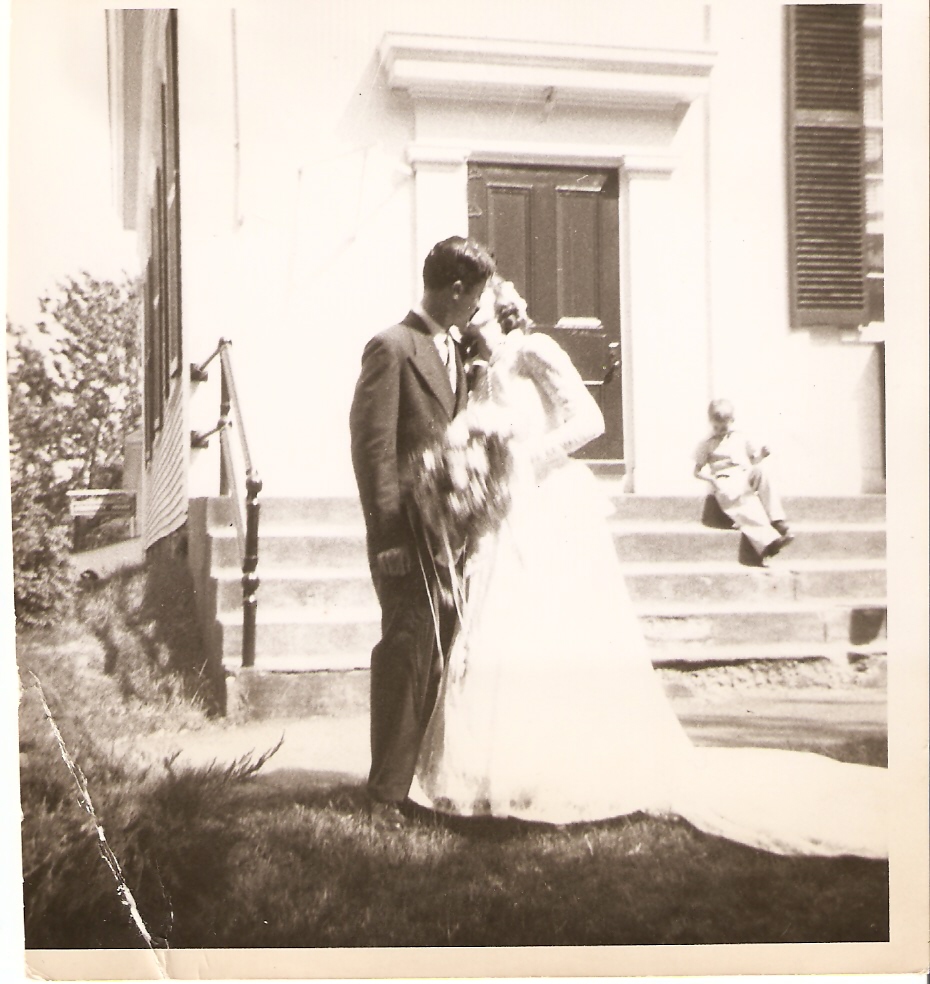 Richard and Wilma on their wedding day in South Walpole, Mass. 10 June 1950
 One of the Britton's many houses. This one is in Tonawanda, New York. They lived here in the early 1960s.
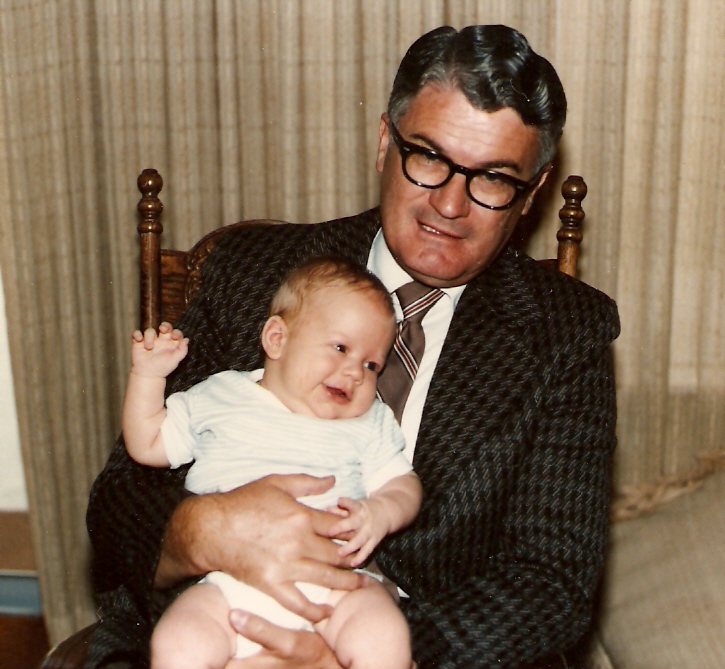 Richard with his daughter Lauren's son, Lincoln Charles, in 1983
RICHARD CLAYTON BRITTON was born on October 1st, 1925 in Mansfield, Bristol County, Massachussetts. His parents were Clayton Charles Britton of Monticello, Maine and Sadie Stella Vasseur of New Brunswick, Canada. He was the second of their seven children.
As a young boy, "Dick" lived in Foxboro, Massachussetts. His family was very poor during the years of the Depression and his father turned to fox-raising in order to bring in money for the family. Richard always told stories of how hard it was to raise those foxes.
Richard graduated from high school when he was only sixteen. He was highly intelligent and won several awards in school. He attended Dartmouth University in Hanover, New Hampshire. He then joined the Naval Reserves when he was 18. By the time his training as a pilot was over in about 1945, World War II was nearly over, so Richard never fought in combat. He then attended Boston University and pursued his degree in journalism. He worked as a newspaper reporter during the Korean War years, and remained on with the Naval Reserves. He and Wilma Gertrude Fish married on 10 June 1950 in South Walpole, Mass., where her family lived. They met at his sister, Lorraine's wedding, where he played the organ. Lorraine was a nursing friend of Wilma's.
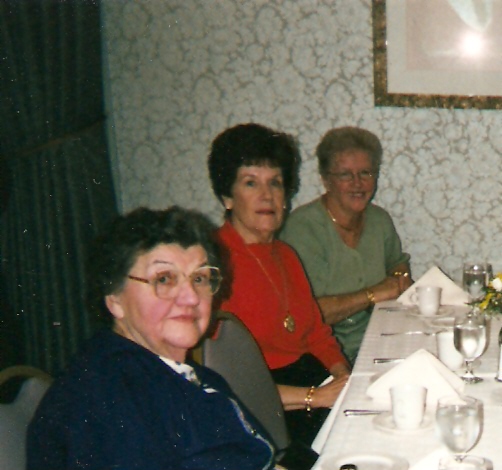 Lorraine is in the middle of this picture, taken by Wilma. She wrote on the back, "Wouldn't you know that she sat next to me!!"
For a time Richard thought seriously about joining the FBI, until he heard from a friend that American Airlines was hiring pilots. He took a job with them instead and moved with Wilma to Beverly, Massachussetts, near enough that he could fly out of Boston's airport. Here, Wilma gave birth to their oldest child, Lauren. A few years later, he moved with his family to Dallas, Texas, perhaps to fly some different routes than what he was used to. The Brittons stayed in Dallas for about six years and had two more daughters, Julie and Kimberly. He moved his family to Sunnyvale, California for two years, then found out that if he took routes out of Buffalo, New York, he could become a captain much sooner. They lived in Buffalo for one year, then moved to Ridgefield, Conn., where they had twin sons, Roger and Steven.
The Brittons joined the LDS Church in 1964 and soon moved to Tustin, California, partly in order to live near more members of that church. Dick had a house built in a nearby town called Villa Park, where the family lived for two years. Dick moved his family again, this time to Calistoga, California, where they lived for six years. Richard had taken up sailing and wanted to own a boat, so the ever-on-the-move Britton family moved to El Cajon, near San Diego, California. He and Wilma then moved to Redding, California and then to Napa, California. He suffered from high blood pressure and American Airlines wouldn't allow him to fly anymore because of his condition and medication, so he retired a few years early. He passed away in September 1986. He was only 59.
Richard filled his free time with hobbies. He was extremely talented musically; he played the organ and the piano masterfully, and could play any song by ear after hearing it only once. He even built an organ from scratch, having ordered all of the pieces and technical instruments. He took up golf, became certified in scuba diving, and learned to sail. He sometimes kept a small plane at nearby airports for pleasure flying. He made model and radio-controlled airplanes, became an accomplished oil painter and loved to read.
Julie Britton Cooper's memories:
Being an airline pilot, Dad’s schedule had him work 2-3 days a week usually with a trip back east, and then he would be home four days. It seemed like he was home most of the time. Because of this schedule when I was in Jr. High and high school (before I could drive) it was Dad that would be waiting out front of the school to take us home.
Dad did almost all of the shopping (Mom would say how spoiled she was because Dad did this.) He actually seemed to like grocery shopping and he never went alone. He always took some of us kids. I went with him a lot. He never looked at which products were on sale he just went through and bought what we needed and then some. He would always buy treats. Our pantry was full of doughnuts, Ding Dongs, Fritos, ice cream, soda, etc. He loved peppermint gum and kept a big bean pot full of it. He said that when he was little and they didn’t have much money he would dream of the day when he was a man with a good job and would be able to buy any candy bar he wanted. He thought that would be great. And so he did do that. If we wanted a candy bar he would always buy it. I liked to see his suitcase when he got home from a trip because he would have a few in it. Clark bars were a favorite.
Dad also did the Christmas shopping. I remember when I was a junior in high school he bought me a coat for Christmas and I really liked it. I wore it all the time. I was surprised then that he would know the taste of a teenage girl and actually go to a store and look for something and get it right.
Dad liked sports. When we lived back east he would watch the Mets on TV. As a boy he loved the Red Soxs and Ted Williams. When we moved to So Cal he would take us to Angel games, then in Nor Cal to A’s games. It was fun.
He watched football on TV and when I was young he taught me all about the game, so I started to like it. When we lived in Tustin and Villa Park Dad went to every football game even the away games. I know, because Kim and I always went with him. We had fun. Dad even got to know the players names. When I was in high school I would sit with my friends at the games, but I would look up in the stands and see Dad there. Sometimes I remember feeling bad because he was all alone, but I knew he just like watching the game.
Dad really liked little kids. He would often say that he wished we could be small again for a day. When I was six or seven I remember he read me “Charlotte’s Web.” Before we went to bed he would ask, “Have you said your prayers?” When I was in high school he heard me say the word crap. He said that he didn’t think a nice girl would use that word. I didn’t after that.
Dad loved music, all kinds. From pop, rock to classical. He liked many of the popular songs of the time and he bought the albums. He loved the hymns and playing them, especially on the pipe organ at church. I went to a tabernacle organ concert in Salt Lake with him once and I could see how touched he was by the music.
In college, Dad would call me a few times a week. My roommate had never had her father call her, just her mother. She thought it was really neat that my Dad would make the call and be interested in my classes and what I was doing. Dad was always interested in what we were doing. One of his favorites quotes was “plan ahead.” He felt it was important to be prepared, and to think things through ahead of time.
Dad liked to travel; of course he had a great job for that. He liked going to work; I don’t think I ever heard him complain about it. He loved to fly planes. When he went on vacation he didn’t really like to visit relatives so much (that was Grammy’s favorite thing to do) or go through museums, he liked to be outdoors. Preferably a tropical setting, but he loved the pacific northwest too. He loved to plan trips and would buy books and read all about the places he wanted to go. He thought that preparing for a trip was half the fun.
He told me that one of the happiest days of his life was when I called him and told him I was pregnant with Adam (after eight years we were not sure I would be able to have a baby.) I always knew Dad loved us and I knew he loved me. He helped me so much and I’m so glad he was and is my Dad.
Please post your memories or favorite stories in the comments section below. If you have any corrections you would like me to make, please email me at nhornfamATmsnDOTcom.
Friday, December 15, 2006
The Britton surname
I didn't know it was French! From SurnameDB.com:
This interesting name does not mean anything to do with 'Britain' as in the British Isles of modern idiom, rather it is a national or ethnic name for someone from Brittany, France, a 'Breton'. In the 6th Century the Celtic speaking Bretons were driven to South West England (indeed the name Britton is frequently found around Bristol) by Anglo-Saxon invaders, and many Bretons came to England with William the Conqueror in 1066. The name can be spelt in several different ways in the modern idiom, ranging from, Britain, Britten, Brittan, Brittin and Brittain to Briton and Britney. The surname has long been established in Staffordshire; William Bryttayne married Elizabeth Cook in Betley, on November 28th 1559, and John Brittain was christened in 1589, also in Betley. In London, the christening of Edward Brittain was recorded on November 17th 1630 at St. Mary Whitechapel, Stepney. The first recorded spelling of the family name is shown to be that of John de Bretagne (witness), which was dated 1291 in the Assize Rolls, Staffordshire, during the reign of King Edward 1, known as 'The Hammer of the Scots', 1272-1307. Surnames became necessary when governments introduced personal taxation. In England this was known as Poll Tax. Throughout the centuries, surnames in every country have continued to "develop" often leading to astonishing variants of the original spelling.
Tuesday, August 08, 2006
Nathan Hale
Grandma B used to tell me we're related to Nathan Hale, the Revolutionary War hero. If you don't know who he is, read this. Does anyone know how we're connected?
Monday, August 07, 2006
Wilma Gertrude Fish Britton
 Wilma as a young girl (please excuse the photo quality)
 The house in which Wilma grew up (on Washington Street in South Walpole, MA)
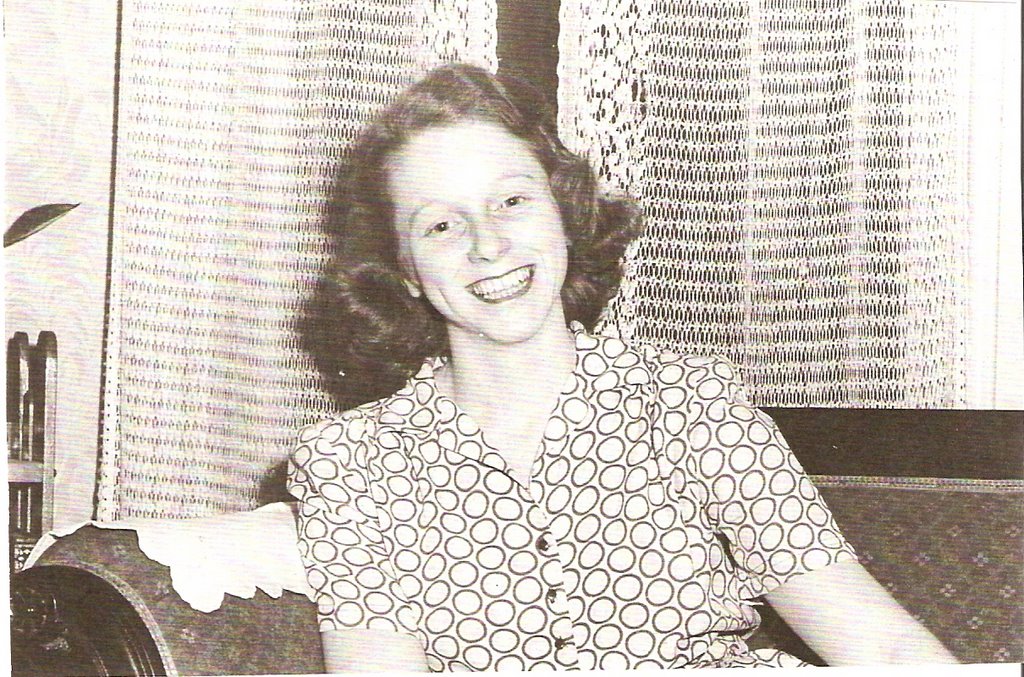 Wilma in her 20s
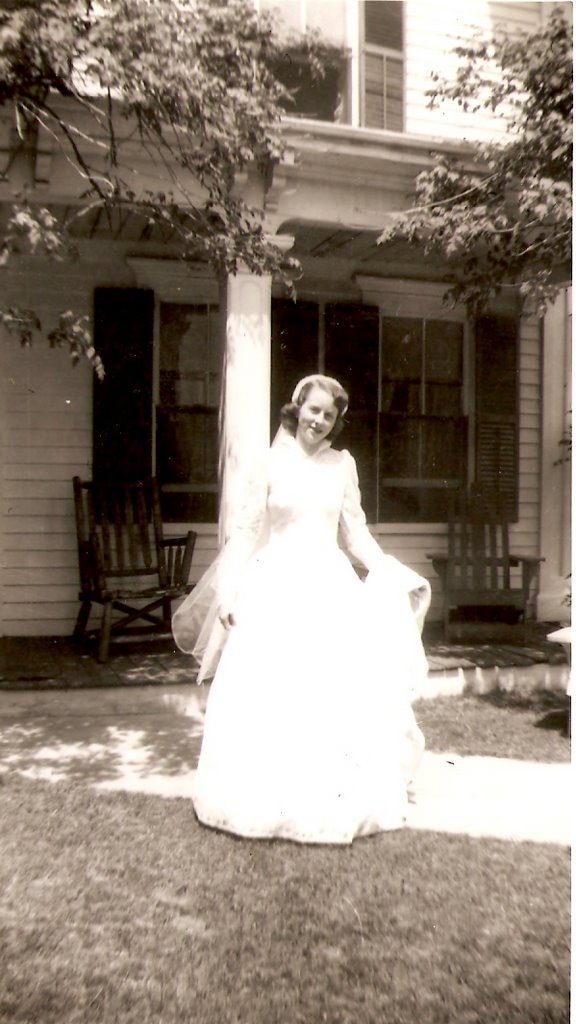 Wilma on her wedding day. On the back of this picture, she wrote, "Wilma G. Fish, S. Walpole Mass. June 10, 1950 Just before 2 PM Wedding to Richard C. Britton"
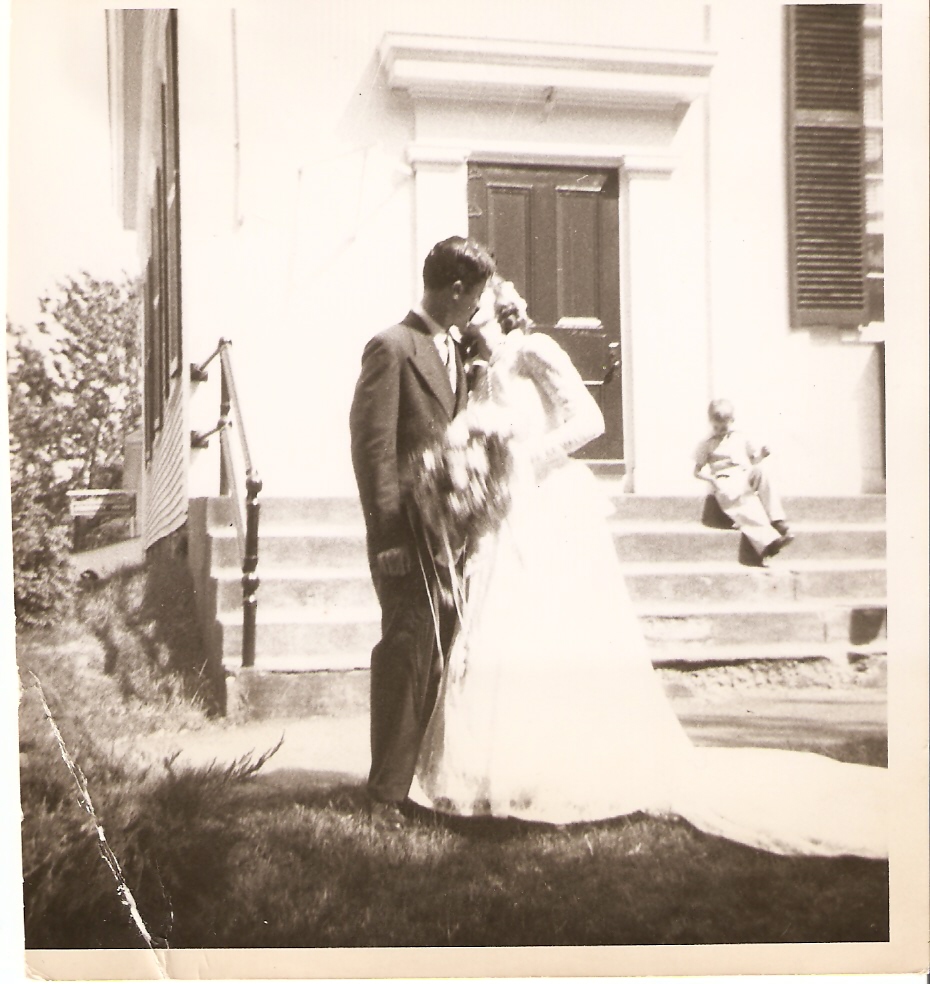 A kiss in front of the South Walpole United Methodist Church, on Washington Street, directly across from the Fish home
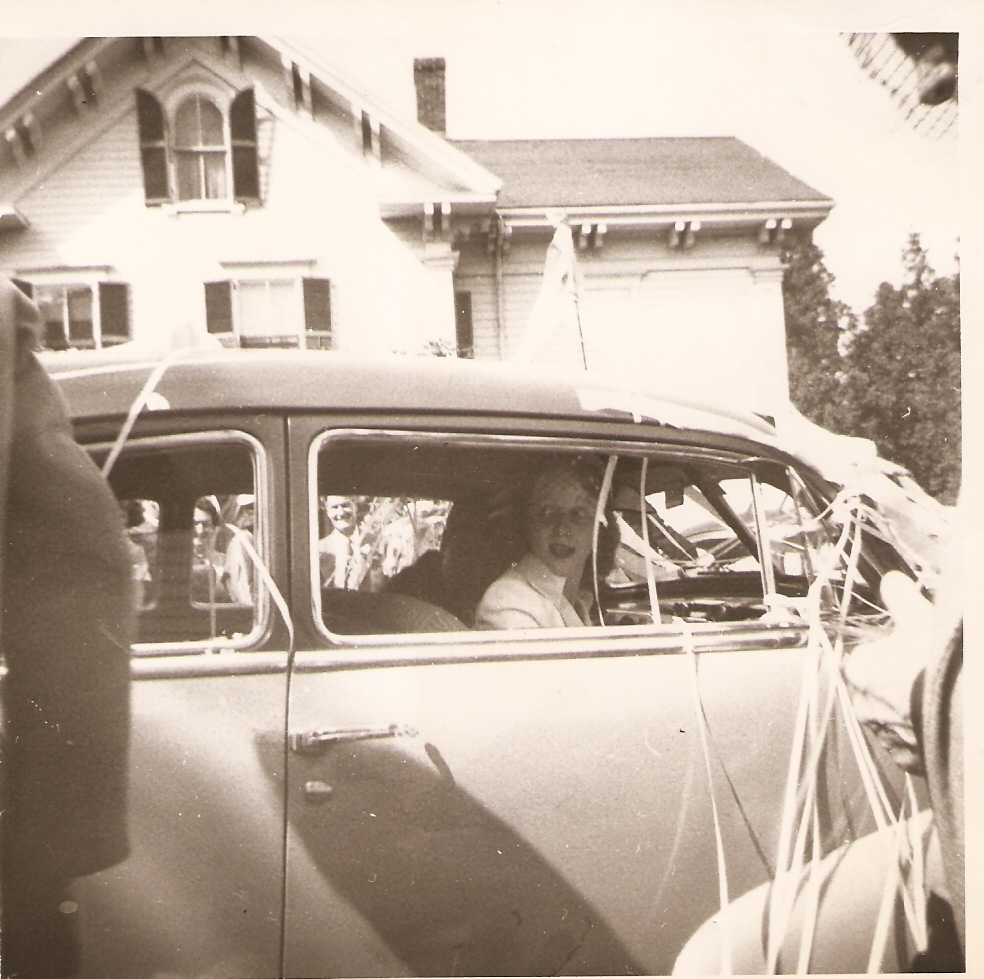 Wilma and Dick leaving their wedding, 1950
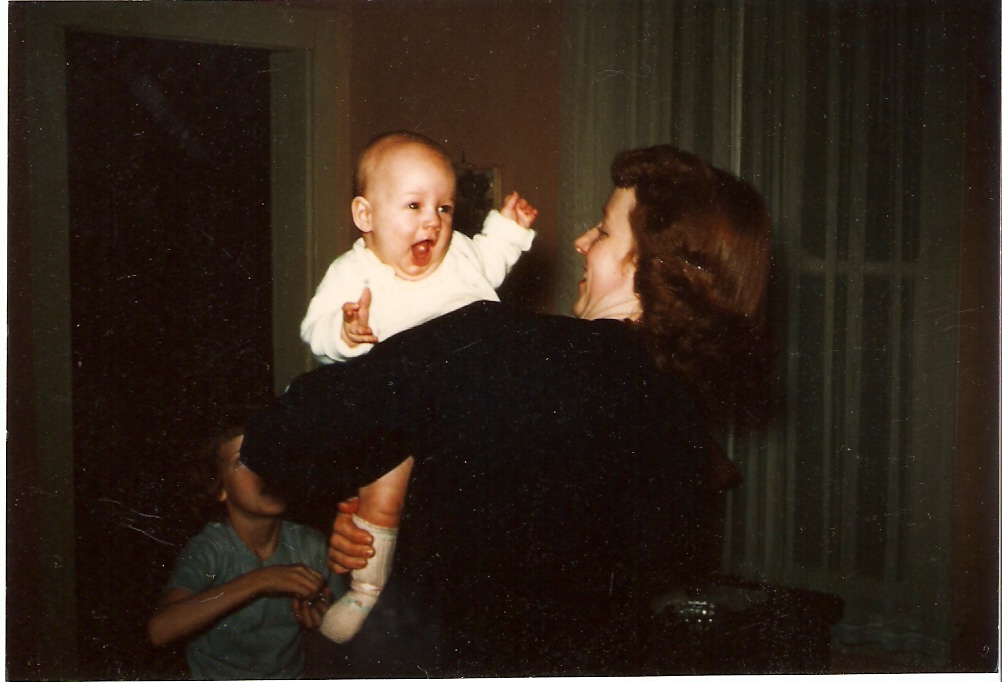 Wilma with her oldest daughter, Lauren, Christmas 1952
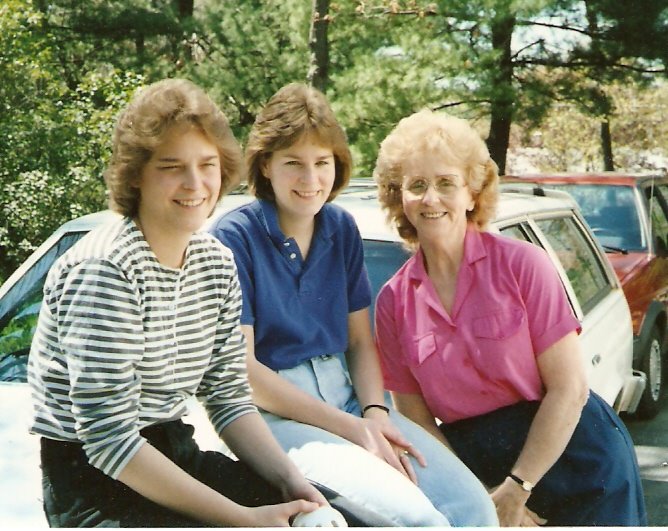 Wilma with Uncle Frankie's daughters, Carolyn and Sally Fish (thanks Kim!)
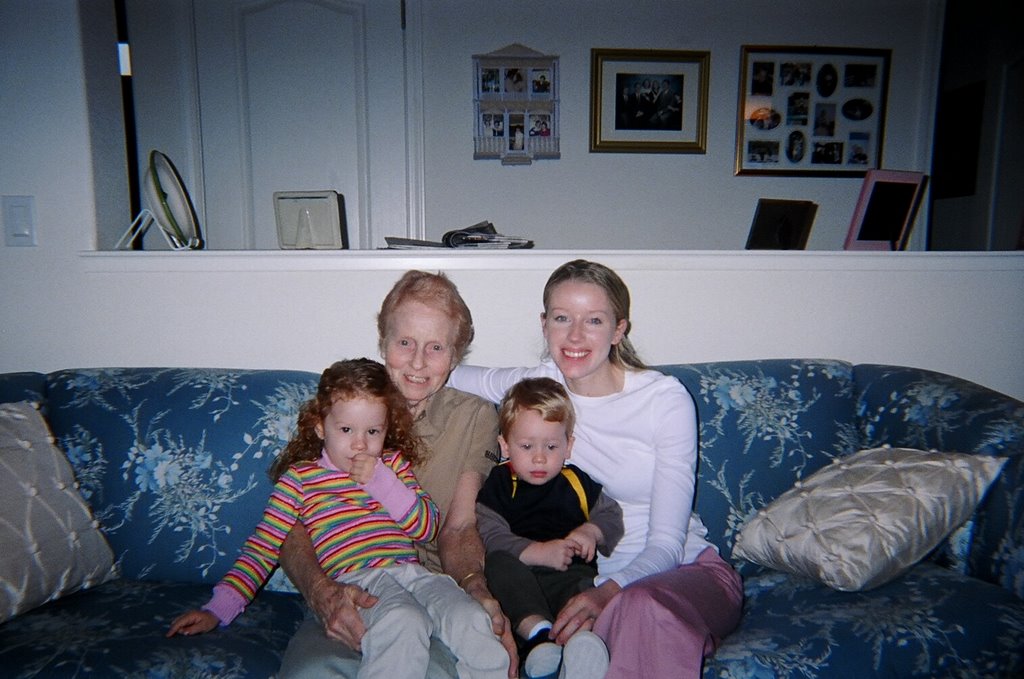 A picture from my visit with "Grandma B" in October 2004, Petaluma, California
WILMA GERTRUDE FISH was born on 24 May 1928 in Norwood, Norfolk Co., Massachussetts. Her parents were Leslie Willard Fish of Charlottetown, PEI and Ruth Frances Elliott Harris of Littleton, New Hampshire. She was the fourth of six children, and the only girl in the family. She was named for her grandmother, Wilma Gertrude Harris. Wilma had red hair, freckles and gray eyes. She had such fond memories of her childhood, spent in several different places along the East Coast.
I spoke to "Grandma B" in the fall of 2004 and took the following notes from our conversation:
(If any of you are able to fill in some blanks, please let me know, or you can post something yourself, for example, if you have more pictures, which somebody's got to! If you need help posting, please let me know!)
My notes begin when she was talking about living in Bristol, Rhode Island.
Wilma's family moved to Bristol when she was about three or four years old. Grandma always talked about how much she loved living in Bristol, even though she was quite young. There was a large estate* there (on the shores of Mt. Hope Bay), "miles long" that went from the forest down to the ocean. It was owned by the Haffenreffer family, "who may have made their money in alcohol." Leslie, Wilma's father was looking to change work (this was before the Depression), and there was a chicken farm on the estate with dozens of hen houses that came from behind the house and stopped at the beach. There was a lovely house near the hen houses into which her family moved. She could walk to school through King Phillip's Trail or along the ocean. She told me that they could see Fall River across the ocean. It was about 2 miles away, but on a clear summer afternoon, you could see it.
They would go swimming a lot while they lived in Bristol, and she remembers that her dad would only go in up to his knees, but her mom could float. She remembered Lucy and Margaret Patabia, whose father was the gardener on the estate. She said often those girls would come over and help with housework in the morning so they could all go swimming the rest of the day. She remembers that one of them "liked Uncle Hermon a little bit." She had very happy memories of Bristol.
Later they moved to Franklin, MA, when she was in fifth through seventh grades. She lived three miles from school and would walk half a mile to the bus and take the bus to school.
The Fish family then moved back to South Walpole, MA, where her father took a job with the Walpole Woodworkers. They had lived there at an earlier time. Her dad bought Mrs. Mabel Mann's house on Washington Street after she died. It was a big, tall house with lots of land around it and her brothers, she thinks maybe three of them, built houses on the land. See house above.
In highschool, Wilma was very popular. She was the head cheerleader and was voted "best looking" in her class. She had a boyfriend named Bob Lonley, who was not well-liked by Wilma's parents. She remembers her dad saing "I'd rather have you dead than married in the Catholic Church," which she then followed with "he knew things he wouldn't explain to me." I'm assuming she meant that her dad knew what was best for her and had more perspective on things like that.
There were two drugstores in **Walpole Center and one was called "Wellington's." It was run by Mr. Jacob Mens, "a wonderful Jewish man" with two daughters. Wilma worked there as a teenager, sometimes until 10 or 10:30 on a Saturday night. One night she told Mr. Mens that a "certain young man" named Stanley was taking her home, but he wouldn't allow it and said to her, "I told your mother I would see that you got home." Later she changed jobs; she thinks she might have grown out of the drug store, "grew up" and went across the street to the dry goods store owned by Mr. Charles Holt. He gave her a job working "not upstairs where all the ladies' clothes were," but downstairs where they had fabric, childrens' clothes, and a gift-wrapping station. She said she felt much more comfortable in that department, as she never felt fashionable or knowledgeable enough to cater to the women who shopped upstairs. She said if you worked in the womens' department, you had to wear "stockings and high heels." She felt that she "would be [her]self downstairs."
Wilma met her husband, Dick (Richard Clayton Britton), through his sister, Lorraine, who was her roommate during their nurse's training at Sturdy hospital in Attleboro, Mass. Wilma was a bridesmaid in Lorraine's wedding in July 1948, and met Richard at the wedding. He was playing the organ for the ceremony. Dick got along very well with Wilma's mother, Ruth, who was also very musical. Her mother once said to her when she started nurses' training, "Perhaps one of the girls in training will have a nice brother."
She told me of nurses training that there were 12 other young women in her class. There were six months of training before a "capping" ceremony. She remembers that Lorraine mostly wanted to get married.
Wilma and Dick were married in the United Methodish Church on Washington Street in South Walpole, Massachussetts on 10 June 1950. Dick was in the Naval Reserves during the Korean war, and he and Wilma moved for a short time to Virginia. Dick eventually took a job as a commercial pilot for American Airlines. They moved to a house on Sunset Drive in Beverly, Mass. While in Beverly, they gave birth to their first child, Lauren Stephanie. A couple of years later, in 1955, they moved to Dallas, Texas. They lived there for six years, and had two daughters there: Julie Ruth and Kimberly Jean. Then the Brittons moved to Sunnyvale, California. Dick found out that if he moved to Buffalo, New York, he would be made a captain much more quickly, and they lived there for one year. Next they moved to Ridgefield, Connecticut, where their youngest children, Roger Clayton and Steven Richard were born in 1965.
The Brittons joined the LDS church in 1964, and soon moved to Tustin, in southern California, to be around more members of their Church. They built a house in a neighboring town called Villa Park, where they lived for two years. Dick soon found Villa Park too crowded, so he moved his family to Calistoga, CA, where they lived for about six years. Dick took up sailing and moved his family again, this time to El Cajon, CA, so he could keep a boat. He was flying for American out of San Diego. Dick and Wilma moved to Redding, CA and then to Napa.
Wilma moved to Elk Grove, California after Dick died. She worked full-time as a nurse in convalescent homes. You could tell she loved the work and formed close bonds with many of her patients and co-workers. She told she liked nursing because it was "clean and neat." When she first started nursing, she preferred the operating room, but "floor duty was good, too." "I just liked being a nurse." Wilma's uncle Ingham died in the early 1990s and left her a sum of money. She bought a house in Petaluma, California, where her daughter Julie lived. While in Petaluma, Wilma became a worker at the Oakland LDS Temple. She kept her impeccably clean little house in like-new condition. She always took such wonderful care of her things, but she mostly loved taking care of people and was the quintessential "woman who never sits down during dinner."
I also asked her about her parents. She said of her dad, Leslie Fish, that he was the "kindest man," that he was very gentle and quiet and that she "never even heard him say 'Damn.' " She said her mother, Ruth, was a hard worker and a good mother to her. Wilma passed away after a relapse of ovarian cancer on 11 April 2005 in Petaluma, California.
*This site has a little information on the Haffenreffer Estate, as well as some small pictures of the coastline.
**According to Mike Amaral, of the Walpole Historical Commission, both Wellington's and the Holt's store were located in Walpole Center, not South Walpole. Thanks, Mike!
Don't forget, you can click on any of these photos to save them to your computer.
Jay and Kim contributed these pictures (and the one of the house in Walpole, Thanks!). Like Jay said, "many people affectionately called her 'Willy.' Her brothers placed this marker where she is buried, next to her parents." (in Walpole, Mass.)


What do you remember about Wilma Britton? Please add to this post or post a comment. Thanks!
Saturday, August 05, 2006
New Blog, please contribute!
After consultation with my wise husband, I have determined that I will create one blog for each of the four main ancestral lines of our family. There will be links in the sidebar to a blog for the Horn family, the Walker family, the Parker family, and the Britton family. That way, you can each contribute to the blog which pertains to your relatives, and you won't have to deal with all those other people you've never heard of!
Please bookmark those blogs which pertain to you. I feel like we all have a responsibility to contribute to these family histories. It is easy to comment and share your memories or corrections, and I will then post them to the pertinent posts.
I'll post my latest efforts on each blog, and I hope you'll share any information you may have as well. I'll use it as a place to post pictures so you can all have copies. All you need to do is click on the picture and download it onto your computer. Then you can save and print it, or bring it to a photo shop to have to made for you.
Also, please feel free to make corrections. Many of you are more familiar with your specific ancestors than I am, and I may have some information wrong. Anyway, enjoy!
Please bookmark those blogs which pertain to you. I feel like we all have a responsibility to contribute to these family histories. It is easy to comment and share your memories or corrections, and I will then post them to the pertinent posts.
I'll post my latest efforts on each blog, and I hope you'll share any information you may have as well. I'll use it as a place to post pictures so you can all have copies. All you need to do is click on the picture and download it onto your computer. Then you can save and print it, or bring it to a photo shop to have to made for you.
Also, please feel free to make corrections. Many of you are more familiar with your specific ancestors than I am, and I may have some information wrong. Anyway, enjoy!
Subscribe to:
Posts (Atom)